
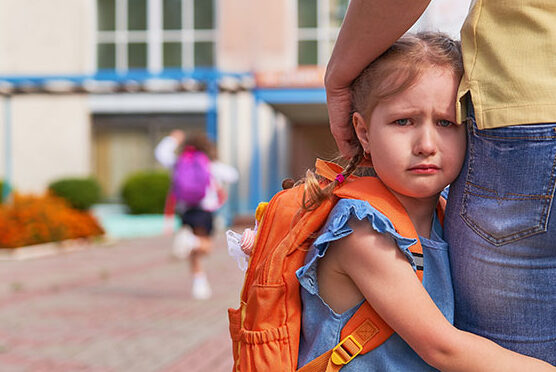
As adults we experience a range of emotions when our children begin or simply even go back to school. It means another year has passed, our children are growing and becoming more independent and having experiences without us outside of the home. It brings lots of mixed feelings as we navigate new adventures – excitement, anticipation, hopefulness and anxiousness.
I remember my frustration and the aching in my heart when my oldest child started school. Every morning of his first week, we would approach the door to his classroom, and he would dive into the shrub by the classroom door and hold on tightly to the trunk. Each time, I would try to find a way to help soothe him and “talk him out” of the tree, extending the already exceedingly long process. At the beginning of his 2nd week, his teacher said to me, “Trish, please trust me. I’m going to ask you go. Donovan will be just fine and we will see you back here in just a short while.” I cried. But over the course of the following days, I realized she was right.
Donovan had been enjoying his days at school. He liked his teachers, and in just the short time he had been there he had made some new friends. I was holding on so tightly, so scared to see him go and so nervous he wasn’t ready, that I wasn’t even recognizing how impactful and directly influential my response was on his ability to adapt and enjoy his new adventure. I needed to adjust my emotional approach, and give my child the confidence and security to engage and interact with the new circumstance.
Helping our children through this separation transition takes a willing adult. We have to modify our mindset and adjust to facilitate the child’s own adaptation to this change. By holding too tightly at the door, lingering at drop offs, we the parents, can create the obstacle for our children’s successful transition. We need to trust in the process. This is one of the reasons our school “Phase-in” is so important for your child’s transition. This schedule is structured to provide time where teachers and parents can help children build strong connections, and establish new routines, while enabling the child to adapt and settle into their new environment, make new friends, learn new things, and thrive.
As parents, this can be a stressful time, and in the time of COVID, it can be even more difficult. COVID has made many children and parents apprehensive and anxious about leaving the home- this is perfectly normal and expected. Masks, while providing a level of security and protection against the virus, unfortunately also shield facial expressions that communicate feelings so important to young children in a time of separation. Conveying to your child through your positive demeanor that they are safe and secure will go a long way in providing them comfort and stability in their new environment. Be gentle and reassuring- using a calm voice, and a relaxed body to let your child know that you wouldn’t leave them if they were not safe and protected.
Providing children with consistency and maintaining regular routines (i.e. pick up times, meal times, bedtime), combined with communicating any expectations regarding where they will be going and what they will be doing, will all be good preparation for their success. Being honest and positive in your communications with your child will provide them with clarity and comfort.
There are many transitions and changes that occur over the years – new siblings; big moves; the loss of loved ones. Instilling a sense of security and confidence early on will enable your child to take on these changes in stride, knowing they have adults in their lives for support and love.
Trish Murphy
Associate Head of School
Image credit: Biltmore Psychology & Counseling